Roses, Human Towers and Cava: Catalan Traditions to Borrow for a Barcelona Wedding
Catalan customs worth borrowing for a Barcelona wedding, from Sant Jordi roses and castellers to correfoc fire, plus the city corners that photograph best.
Why Catalan customs make a wedding feel rooted
Catalonia has a strong sense of its own identity, and much of it comes through in public celebrations: dancing in squares, towers of people, fire in the streets. You do not need Catalan roots to borrow these customs, only a little respect for their meaning and a willingness to let local performers lead.
What follows are the traditions we see working best at weddings in and around Barcelona, along with the places where the light and architecture make the photographs sing. Choose one or two rather than all of them, so each moment has room to breathe.
A quick conversation with a local musician or cultural association usually reveals what is possible on your date. Many groups perform at village festivals through the summer, so booking ahead matters, and a modest donation to their club is often part of the arrangement.
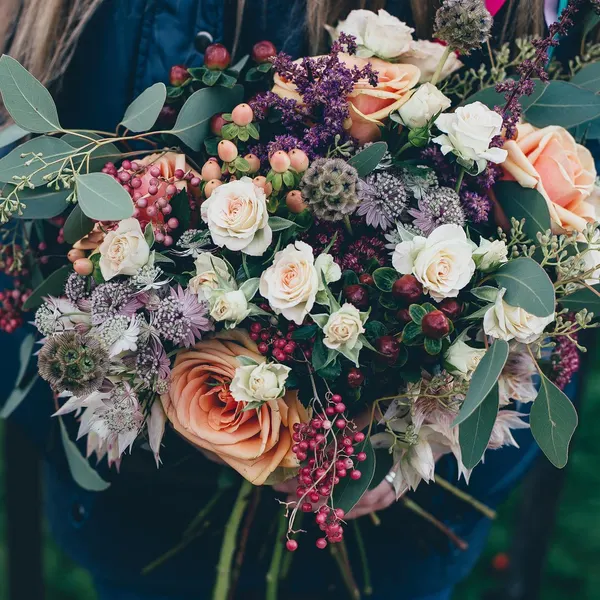
Late summer blooms
The rose and the book of Sant Jordi
Every 23 April, Barcelona fills with stalls selling red roses and books. Catalonia's patron saint, Sant Jordi, slew a dragon whose blood turned into a rose bush, and the city now celebrates with an exchange of gifts between lovers. The Rambla becomes a long market of flowers and new titles, and the whole city reads and blushes at once.
For a wedding, the gesture translates beautifully. Couples exchange a single rose and a favourite book during the ceremony, or leave a slim volume of poetry and a bud at each place setting. A literary reading from Mercè Rodoreda or a translated Catalan poem gives the moment a voice.
If your date falls close to Sant Jordi, take portraits among the flower stalls in the morning before the crowds peak. The red against the honey stone of the Gothic Quarter is hard to beat.
Castellers: a tower of people for the couple
The human towers of Catalonia are listed by UNESCO, and watching a colla build one is genuinely moving. Teams of all ages climb on each other's shoulders until a small child at the top raises a hand, then the whole structure dismantles with care. The message is about trust, balance and community, which suits a marriage rather well.
Some local colles perform at private events, usually in a courtyard or garden with firm ground and space around it. A short display between the ceremony and the aperitif creates a shared memory for guests who have never seen anything like it. Make sure the photographer stands back, as the best frames show the whole tower against the sky.
Ask for a short explanation in English before the display begins. Once guests understand that the shouting, the swaying and the final raised hand all have meaning, they cheer every level of the tower as though they had grown up in Vilafranca.
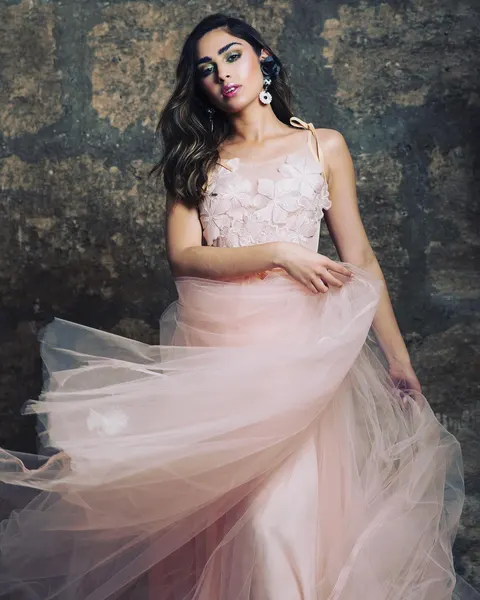
Blush tulle
Sardana, correfoc and other ways to dance
The sardana is a circle dance performed to a cobla band, with joined hands raised and small precise steps. It is gentle enough for grandparents and makes a charming opening to the party, especially when a few Catalan friends lead the circle. On Sunday mornings you can still see it danced in front of the cathedral, which is a lovely thing to show visiting guests.
At the other extreme sits the correfoc, the fire run, when costumed devils swing sparkling pitchforks to drums. A full version needs permits and a large outdoor space, so most couples choose a scaled down performance of drummers and controlled fireworks at a country estate. As a send off at the end of the night, it is unforgettable.
Another option is to hire a few gegants, the giant papier mâché figures that parade at every neighbourhood festival. They make children squeal and grown ups grin.
A cava toast and a Catalan table
Cava is the natural toast here. Many wineries in Sant Sadurní d'Anoia welcome small groups, and a visit with the families who grow the grapes adds meaning when you raise your glasses later. Ask for a brut nature for the aperitif and something richer for the cake.
The meal itself can borrow from Catalan feast days. A late winter wedding might begin with a calçotada, grilled spring onions eaten with bibs and romesco, while summer menus lean towards suquet and arròs negre. Close with crema catalana, burnt at the table for a small piece of theatre.
Vermouth is another Catalan ritual worth borrowing. A Sunday morning vermut with olives, crisps and tinned cockles is how many Barcelona families gather, and it makes a relaxed welcome for guests arriving the day before the wedding.
Photo spots that show the city's craftsmanship
Barcelona rewards an early start. The Gothic Quarter's Plaça Sant Felip Neri is quiet at eight in the morning, and the arched Carrer del Bisbe bridge photographs beautifully in soft light. Around the cathedral cloister, stone and orange trees make a calm backdrop before the tourists arrive.
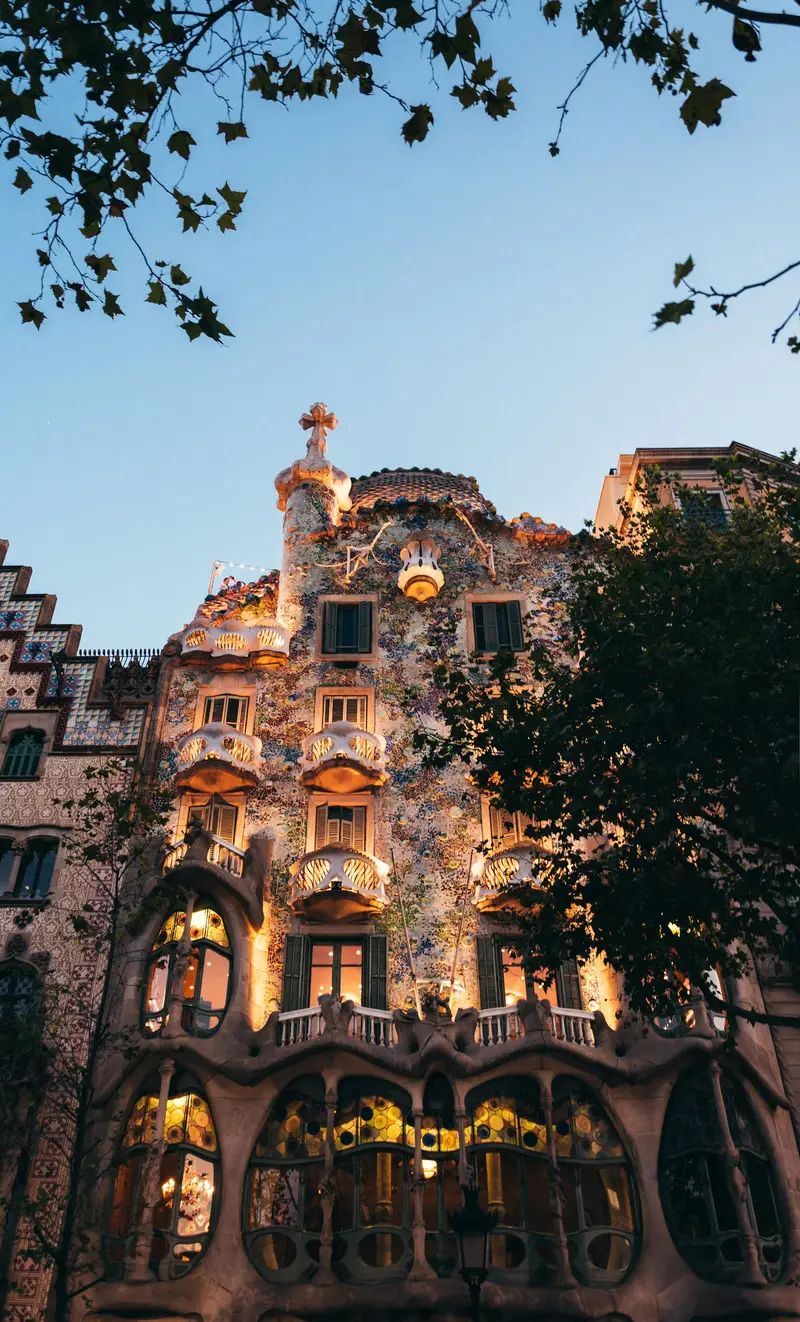
In the Eixample, the facades of Casa Batlló and the Palau de la Música Catalana offer colour and ornament, though interior shoots require permission and fees. Montjuïc gives gardens, terraces and long views across the port, while Tibidabo at sunset frames the whole city down to the sea. For a softer mood, the Bunkers del Carmel are best avoided at weekends, but the sand at Bogatell at dawn is almost empty.
Plan the portrait route with traffic in mind. Moving between the Gothic Quarter and Montjuïc can take longer than expected on a Saturday afternoon, so pick two neighbourhoods at most and leave the rest for a separate session the morning after.
Bringing it together without overdoing it
The most memorable Barcelona weddings we see choose a single theme and follow it through: perhaps a literary thread from Sant Jordi, or a celebration of craft drawn from Modernista tiles and stained glass. A thoughtful designer can echo trencadís mosaic in the stationery, or carry Domènech's flower motifs into the table linen.
Keep the timeline relaxed. Catalan evenings start late, and guests will happily dine at nine and dance until the indoor hours allow. With one or two customs woven in, the day feels unmistakably of this place.
Tell guests about the customs in a short note with their invitations, so they arrive curious rather than puzzled. A line or two about the rose, the tower or the fire run turns each moment into something they have been waiting for.
Begin · Carte postale
Plan your wedding in Athens
wish you were here
Tell us where in Barcelona your imagination has already wandered and we will set up a relaxed first call.
To: Artisti WeddingsApplebys Plads 29, 3. tv1411 Copenhagen · Denmark
As featured in
We use cookies on our website to give you the most relevant experience by remembering your preferences and repeat visits. By clicking “Accept All”, you consent to the use of ALL the cookies. However, you may visit "Cookie Settings" to provide a controlled consent.
This website uses cookies to improve your experience while you navigate through the website. Out of these, the cookies that are categorized as necessary are stored on your browser as they are essential for the working of basic functionalities of the website. We also use third-party cookies that help us analyze and understand how you use this website. These cookies will be stored in your browser only with your consent. You also have the option to opt-out of these cookies. But opting out of some of these cookies may affect your browsing experience.
Necessary cookies are absolutely essential for the website to function properly. These cookies ensure basic functionalities and security features of the website, anonymously.
Cookie
Duration
Description
cookielawinfo-checkbox-analytics
11 months
This cookie is set by GDPR Cookie Consent plugin. The cookie is used to store the user consent for the cookies in the category "Analytics".
cookielawinfo-checkbox-functional
11 months
The cookie is set by GDPR cookie consent to record the user consent for the cookies in the category "Functional".
cookielawinfo-checkbox-necessary
11 months
This cookie is set by GDPR Cookie Consent plugin. The cookies is used to store the user consent for the cookies in the category "Necessary".
cookielawinfo-checkbox-others
11 months
This cookie is set by GDPR Cookie Consent plugin. The cookie is used to store the user consent for the cookies in the category "Other.
cookielawinfo-checkbox-performance
11 months
This cookie is set by GDPR Cookie Consent plugin. The cookie is used to store the user consent for the cookies in the category "Performance".
viewed_cookie_policy
11 months
The cookie is set by the GDPR Cookie Consent plugin and is used to store whether or not user has consented to the use of cookies. It does not store any personal data.
Functional cookies help to perform certain functionalities like sharing the content of the website on social media platforms, collect feedbacks, and other third-party features.
Performance cookies are used to understand and analyze the key performance indexes of the website which helps in delivering a better user experience for the visitors.
Analytical cookies are used to understand how visitors interact with the website. These cookies help provide information on metrics the number of visitors, bounce rate, traffic source, etc.
Advertisement cookies are used to provide visitors with relevant ads and marketing campaigns. These cookies track visitors across websites and collect information to provide customized ads.