Lyra, Raki and Sugared Almonds: Cretan Wedding Traditions Worth Borrowing
Cretan wedding traditions to borrow: the lyra and syrtos dance, rhyming mantinades, raki toasts, koufeta almonds, the bridal bed and blessed wedding bread.
Why Crete's traditions still matter
Cretans celebrate weddings on a scale and with an intensity that surprises many visitors. In mountain villages, a traditional wedding can last several days, with entire villages invited, endless food and music that continues until sunrise. While destination couples rarely recreate all of that, borrowing a few customs adds warmth and meaning to the day. Even in towns, weddings remain big, noisy, generous affairs where the whole extended family has a role.
Locals generally love seeing visitors embrace their culture, as long as it is done with respect. The key is to choose traditions that resonate with you, understand their origins and include them naturally rather than as a performance. Here are the customs we suggest most often.
Your musicians, caterers and venue hosts are the best guides, and many will be delighted to explain the meaning behind each ritual to your guests.
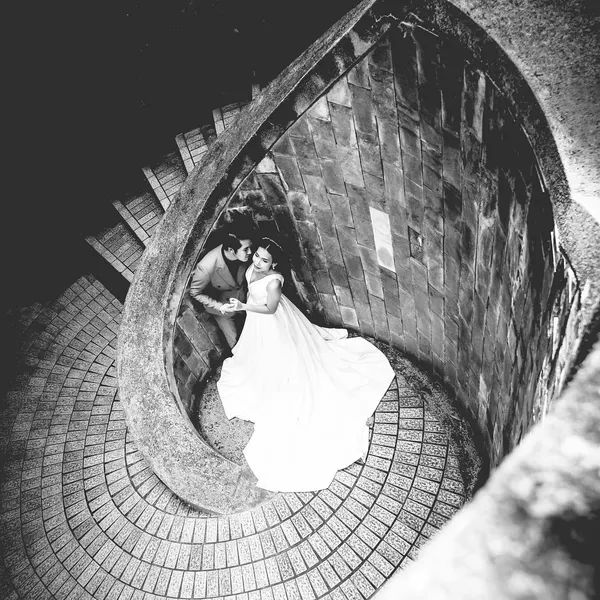
Spiral staircase
The music of the lyra
No Cretan celebration is complete without the lyra, a three stringed instrument played with a bow, usually accompanied by the laouto, a type of lute. The sound is haunting and joyful at once, and it has a remarkable ability to get people of every age on their feet. The best players are local celebrities, and families often follow particular musicians from village to village through the summer.
Book a lyra ensemble for the drinks reception or for a set after dinner. They will lead traditional dances like the syrtos and the energetic pentozali, and encourage guests to join the circle. Even guests who have never danced before quickly find themselves holding hands in a line.
Some couples choose to walk down the aisle to a slow lyra melody rather than a string quartet, which brings tears to many eyes.
Mantinades: improvised couplets
Mantinades are rhyming couplets, often improvised, that Cretans use to express love, humour, teasing or blessings. At weddings, musicians and guests trade mantinades about the couple, their families and the joys and challenges of married life. Some musicians are so quick that they will weave guests' names into a couplet within minutes of being introduced.
Ask your musicians to prepare a few mantinades in Greek and English, or invite a Greek speaking friend to compose one. It is a beautiful way to honour the couple with words that are personal yet rooted in centuries of tradition.
Printed in the order of service or on the menu cards, a short mantinada gives guests a lovely keepsake to take home.
Under the arcades
Raki and the art of the toast
Raki, known locally as tsikoudia, is a clear grape spirit distilled after the harvest. In Crete it is offered as a sign of hospitality, at the start of a meal, at the end and often in between. Raising a glass of raki together is a gesture of friendship. Many families still make their own in copper stills each autumn, and the distilling days are festive occasions in their own right. Expect the bottle to reappear, unasked, at the end of every meal.
Consider a raki toast during the welcome dinner or after the ceremony, served in small glasses with nuts, dried fruit or local cheese. For a sweeter option, rakomelo, warm raki with honey and spices, is lovely on cooler evenings in spring or autumn.
Guests unaccustomed to strong spirits can simply touch the glass to their lips; nobody will be offended.
Koufeta and the bridal bed
Koufeta, sugared almonds wrapped in tulle, are a Greek wedding staple. The almond's bitterness and the sugar's sweetness represent the mix of life's experiences. They are usually given in odd numbers, which cannot be divided, symbolising the unity of the couple. Many couples display them in a glass bowl at the entrance or tuck a bundle beside each place setting. In Crete the custom is often accompanied by songs from the older women of the family.
Another custom is the krevati, or making of the bridal bed. Unmarried friends make the bed and toss rice, petals and money on it, sometimes rolling a baby across it for fertility. It is a playful ritual that can be adapted into a light hearted pre wedding gathering.
Both traditions translate easily into a destination wedding and give friends a chance to participate actively.
Bread, blessings and the dance of money
Bread holds a special place in Cretan culture. Elaborately decorated wedding breads, shaped with flowers, birds and symbols of fertility, are baked by women in the village. Today you can commission a decorative bread from a local bakery to display at the reception or share with guests. Some of these loaves are so intricate that they are kept as decorations long after the wedding.
During the first dance, guests sometimes pin money to the couple's clothes or throw notes over them as a wish for prosperity. Some couples prefer a gentler version, such as a basket for guests to leave notes and wishes, and both can be joyful.
Rice thrown after the ceremony, symbolising roots and fertility, is another simple custom you can easily include.
Including traditions with respect
When borrowing customs, it is important to understand their meaning and context. Work with local musicians, cooks and venues who can explain each tradition and guide guests through it. A short note in the programme or a brief introduction from the band helps everyone follow along. If in doubt, simply ask; people are proud to share.
Above all, let the traditions feel natural. Crete is a place where hospitality and joy are part of everyday life, and a wedding here becomes a celebration not just of two people but of community, food and music shared under the stars.
It helps, too, to learn a few words. A heartfelt efcharistó to the cook, or a clumsy but sincere attempt at the first steps of the syrtos, will be remembered by your Cretan hosts far longer than any perfect detail of styling, and it sets the tone for guests to join in freely.
Begin · Carte postale
Plan your wedding in Athens
wish you were here
Whether Crete is a firm plan or a hunch, a few lines about your date and guests is all we need to start.
To: Artisti WeddingsApplebys Plads 29, 3. tv1411 Copenhagen · Denmark
As featured in
We use cookies on our website to give you the most relevant experience by remembering your preferences and repeat visits. By clicking “Accept All”, you consent to the use of ALL the cookies. However, you may visit "Cookie Settings" to provide a controlled consent.
This website uses cookies to improve your experience while you navigate through the website. Out of these, the cookies that are categorized as necessary are stored on your browser as they are essential for the working of basic functionalities of the website. We also use third-party cookies that help us analyze and understand how you use this website. These cookies will be stored in your browser only with your consent. You also have the option to opt-out of these cookies. But opting out of some of these cookies may affect your browsing experience.
Necessary cookies are absolutely essential for the website to function properly. These cookies ensure basic functionalities and security features of the website, anonymously.
Cookie
Duration
Description
cookielawinfo-checkbox-analytics
11 months
This cookie is set by GDPR Cookie Consent plugin. The cookie is used to store the user consent for the cookies in the category "Analytics".
cookielawinfo-checkbox-functional
11 months
The cookie is set by GDPR cookie consent to record the user consent for the cookies in the category "Functional".
cookielawinfo-checkbox-necessary
11 months
This cookie is set by GDPR Cookie Consent plugin. The cookies is used to store the user consent for the cookies in the category "Necessary".
cookielawinfo-checkbox-others
11 months
This cookie is set by GDPR Cookie Consent plugin. The cookie is used to store the user consent for the cookies in the category "Other.
cookielawinfo-checkbox-performance
11 months
This cookie is set by GDPR Cookie Consent plugin. The cookie is used to store the user consent for the cookies in the category "Performance".
viewed_cookie_policy
11 months
The cookie is set by the GDPR Cookie Consent plugin and is used to store whether or not user has consented to the use of cookies. It does not store any personal data.
Functional cookies help to perform certain functionalities like sharing the content of the website on social media platforms, collect feedbacks, and other third-party features.
Performance cookies are used to understand and analyze the key performance indexes of the website which helps in delivering a better user experience for the visitors.
Analytical cookies are used to understand how visitors interact with the website. These cookies help provide information on metrics the number of visitors, bounce rate, traffic source, etc.
Advertisement cookies are used to provide visitors with relevant ads and marketing campaigns. These cookies track visitors across websites and collect information to provide customized ads.